We are a participant in the Amazon Services LLC Associates Program, an affiliate advertising program designed to provide a means for us to earn fees by linking to Amazon.com and affiliated sites. Learn more
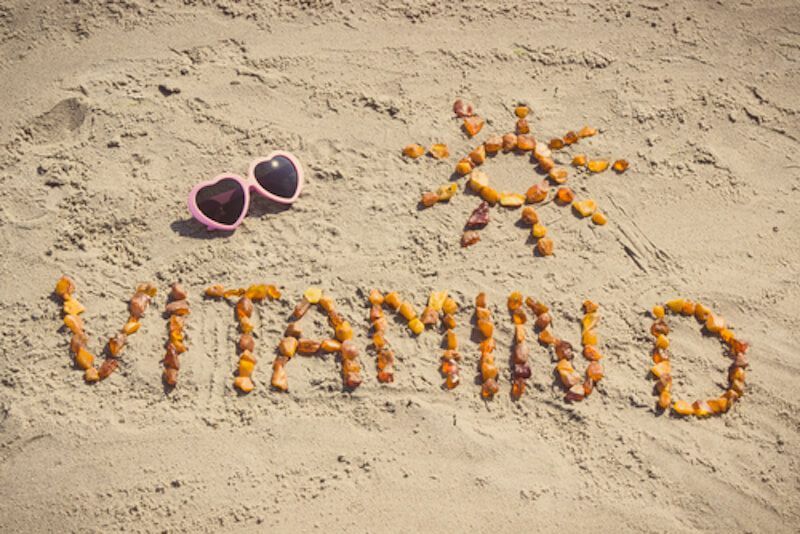
Ask any group of people – ‘Who here has not been warned about the dangers of melanoma and skin cancers?’ and you may get a surprising hand or two being raised, but most everyone has been cautioned against melanoma and how to avoid it. According to the Skin Cancer Foundation, these are the best ways to avoid skin cancer:
The bottom line is to avoid the sun as much as possible if you want to prevent skin cancer. But what do we do when the sun provides us with one of the most important vitamins that our body needs? How do we stop ourselves from developing a vitamin D deficiency?
One of the human body’s most amazing abilities is the ability to produce its own Vitamin D when exposed to the sun. In fact, all mammals have this ability, as do some forms of fungi and alfalfa.
While food and supplemental sources of Vitamin D do exist, the sun is the most natural source and our bodies are designed to utilize it in order to make Vitamin D!
Cholesterol that is present in our skin reacts with UVB radiation and creates a compound called cholecalciferol, a biologically inactive form of Vitamin D.
Through a series of biochemical processes, the liver converts cholecalciferol to calcifediol and the kidneys convert calcifediol to calcitriol, the biologically active form of Vitamin D.
From here, Vitamin D can travel to the various areas of the body that need it, which is almost every part.
Vitamin D, a prohormone (not exactly a vitamin, per se) is known to be a major contributor to healthy calcium and phosphate concentrations as well as a promoter of healthy bones, both in growth and regrowth.
Vitamin D deficiencies can cause rickets, osteoporosis, muscle wasting, and numerous hormonal deficiencies; and although not causal, numerous studies have linked Vitamin D deficiencies to hundreds of different conditions including heart disease, many cancers, autoimmune conditions, inflammation, and mental health disorders.
In fact, studies have shown that low levels of Vitamin D are linked to the more severe forms of melanoma!
Clinical trials are underway due to research surrounding the protective benefits of Vitamin D for melanoma survivors.
While some health organizations say that no exposure to the sun is good, researchers have been able to show that in areas where UV radiation from the sun is higher, there are much lower rates of many different types of cancers, as well as a better prognosis when they are diagnosed.
This list includes but is not limited to lymphoma, prostate, lung, colon, leukemia, bladder, pancreatic, and breast cancers. Researchers concluded in these studies that Vitamin D, or lack thereof, is a major contributor to a less severe prognosis.
Theoretically, one could argue that people who have a lot of sun exposure, sun worshippers, outdoor workers, and people who simply spend a lot of time outside, would have higher rates of skin cancer.
On the contrary; a population-based control study in Sweden last year compared the occupations of 74,000+ people diagnosed with skin cancer with a control group of 500K+.
The study concluded that people who have indoor occupations and thus, are not exposed to UV rays regularly, had a significantly increased risk of skin cancer than their outdoor-occupation counterparts.
So if the sun can cause such a deadly form of skin cancer, how do we reconcile all of the other protective effects?
The good news is that our body begins to metabolize Vitamin D almost immediately and can create a good amount within 20-25 minutes of unprotected sun exposure.
This is usually less time than it takes for even the fairest of skin to get a sunburn. The timing will depend on the time of day (midday is best,) the tone of your skin (darker skin requires more time) how much skin is exposed (more skin, more metabolism of Vitamin D) as well as where you live (closer to the equator is more likely to create Vitamin D faster.)
Further research has revealed that people who have intermittent sun exposure, as well as people who have exposure leading to sunburns, have much higher chances of developing skin cancer than people who spend time in the sun several times per week.
Many humans suffer from chronic and intermittent inflammation. Inflammation is caused by various dietary practices coupled with a lack of exercise.
Studies have shown that inflammation can be counterproductive to the positive effects of UV rays and Vitamin D levels, and can even interfere with our ability to synthesize Vitamin D from the sun.
Due to sun avoidance and diet, the majority of the population is at least borderline on Vitamin D deficiency.
Consuming shiitake mushrooms, fortified plant milk, tofu, orange juice, and breakfast cereals can certainly help.
Adding a vegan Vitamin D3 supplement is also recommended. Although Vitamin D toxicity is extremely rare, as always, you should consult your medical care team before taking any supplements.
Now go get some sun!
YOU MIGHT ALSO LIKE: