Tips for Fueling Vegan Teen Athletes
Author Ian Lewis shares a few essential tips on fueling athletic vegan teens to help them perform their best.
Vegan teen athletes don’t differ at all from any other athlete. Their diet is maybe different since it contains no animal products, but their workouts and success rates are just as with any other teen athlete. Their diet and lifestyle don’t necessarily affect their performance, but they might need a bit of a boost when it comes to getting enough nutrients for their developing bodies that are consuming a lot of energy. Here are a few simple but essential tips for fueling your vegan teen athletes, so they can easily perform their daily tasks and be successful at their sports.

You might also like:
- VEGAN KIDS ON THE RISE? 1 IN 10 BRITISH KIDS REFUSE TO EAT MEAT
- 5 VEGAN CELEBRITIES WHO PUBLICLY WISHED THEIR MOMS A HAPPY MOTHER’S DAY
- DELICIOUS ADULT LOADED GRILLED CHEESE
- PERFECT VEGAN STARTERS: APPETITE TEASING SWEET AND SOUR SOUP
- IN CONVERSATION WITH AMANDA LITTLE- THE CO-FOUNDER OF ABBY&FINN
- CRYPTIC PREGNANCY LEAVES TEENAGER STUNNED AS SHE DELIVERS A BABY
- CHICK-FIL-A RESEARCHING VEGAN MEAT OPTIONS FOR ITS MENU
- VEGAN SKIN CARE LINE ‘KYLIE SKIN’ IS THE BILLIONAIRE JENNER’S NEW VENTURE
Tips for Fueling Vegan Teen Athletes
Equipment first
Before we get into the details on how you can secure a proper diet and nutrition for your vegan teen athlete, you should also entirely support their lifestyle. We are talking about their equipment for the training. If they are vegans because of environmental reasons, it is safe to say that they would like for their clothes to be eco-friendly as well.

When it comes to their clothing, you can look for leggings, shorts, and shirts that are made from recycled materials and that have a compression blend of PET (Polyethylene terephthalate). Also, if your teen likes running, don’t forget to provide them with the best running socks that are entirely eco-friendly and comfortable. Additionally, if they are into sports such as baseball, football, volleyball and other sports that might have leather accessories, look for the equivalent accessories made of faux leather or other eco-friendly and cruelty-free materials.
Get enough protein

Read more at:
- Vegan Protein Boosts
- Vegan Protein? But What About Fiber?!
- The Healthiest Protein
- Plant Based Protein Sources
- But Where Do You Get Your Protein You Vegan!
If you are a vegan teen athlete, you will have to deliberately seek proteins, because your body is going to need it. Fortunately, plant and vegetable proteins can repair muscles in the same way animal ones can, but you will have to increase your protein intake for 10%. This is to help your body digest enough plant proteins because not all of them can be fully digested by your body. If you are an endurance athlete, the daily intake of proteins recommended is from 0.55 to 0.65g per pound of your body weight, but for more strength-based athletes it is recommended from 0.73 to 0.77g per pound.
Stock up on carbs

Since your nutrition is not complicated and there aren’t that many energy fuels, you need to make sure to stock up on carbs as much as you can in order to have enough energy for your workouts. So, the majority of your calories are going to consist of complex carbohydrates and of low-to-moderate amounts of fat. Your daily intake of carbohydrates per pound of bodyweight is going to vary from 2.7 to 4.5 grams. Vegan teen athletes, in order to get the carbs, usually eat whole grain bagels, pasta, English muffins, green vegetables, hummus, veggie burgers and peanut butter and jelly sandwiches.
Diversify the diet
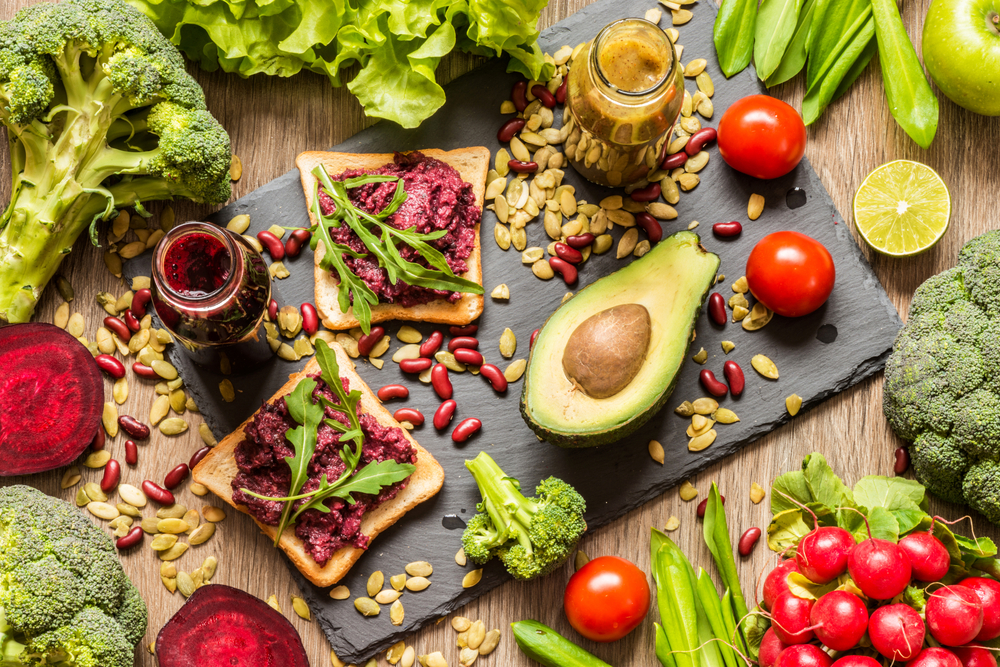
Since you are kind of limited in foods, eating the same meals every day can lead to a deficiency in minerals and certain vitamins. This can be harmful to your health and your athletic performance, and it causes fatigue, inability to properly repair and build muscles and poor bone density.
In order to make up for the lack of magnesium, zinc and other micronutrients, you have to widen the variety of fruits and vegetables in your diet. Make sure to eat foods that have plenty of vitamin B12, which can be found in cereals, soy milk, and vegetable stock.
Watch the GI index

When combining your daily diet, you really need to make sure to watch the glycemic index. This is a scale that measures how much carb-heavy foods influence your blood sugar. If you have an endurance workout, you should eat some high GI foods immediately after, because they are quickly absorbed by your body. However, if you eat such foods at any other time, your blood sugar will spike and you will feel hungry, while all the fat will be stored.
On the other hand, foods with a low GI are digested more slowly which will make you feel full longer and the weight gain won’t happen. In order to help you figure out the glycemic index here is a little help:
- Hummus – 0 (per 30g)
- Carrot – 4 (per 80g)
- Peanuts – 1 (per 50g)
- Apple – 5 (per 120g)
- Whole wheat bread – 9 (per 30g)
- Black beans – 7 (per 150g)
- Oatmeal – 13 (per 250g)
- Sweet potato – 22 (per 150g)
- White bagel – 25 (per 70g)
- Raisins – 28 (per 60g)
- White rice – 29 (per 150g)
As you already know, your vegan diet doesn’t differ that much than some regular diet when it comes to being an athlete. All you have to remember is to get enough protein and carbs on a daily basis and stick to the recommended amounts. That way, your body will have enough fuel for your training, you won’t gain weight and more importantly, you won’t damage your health. Not to mention how your athletic performance will not be impacted.
Got more tips on keeping vegan teen athletes fueled and brimming with energy? Comment below.

GET MY ISSUES